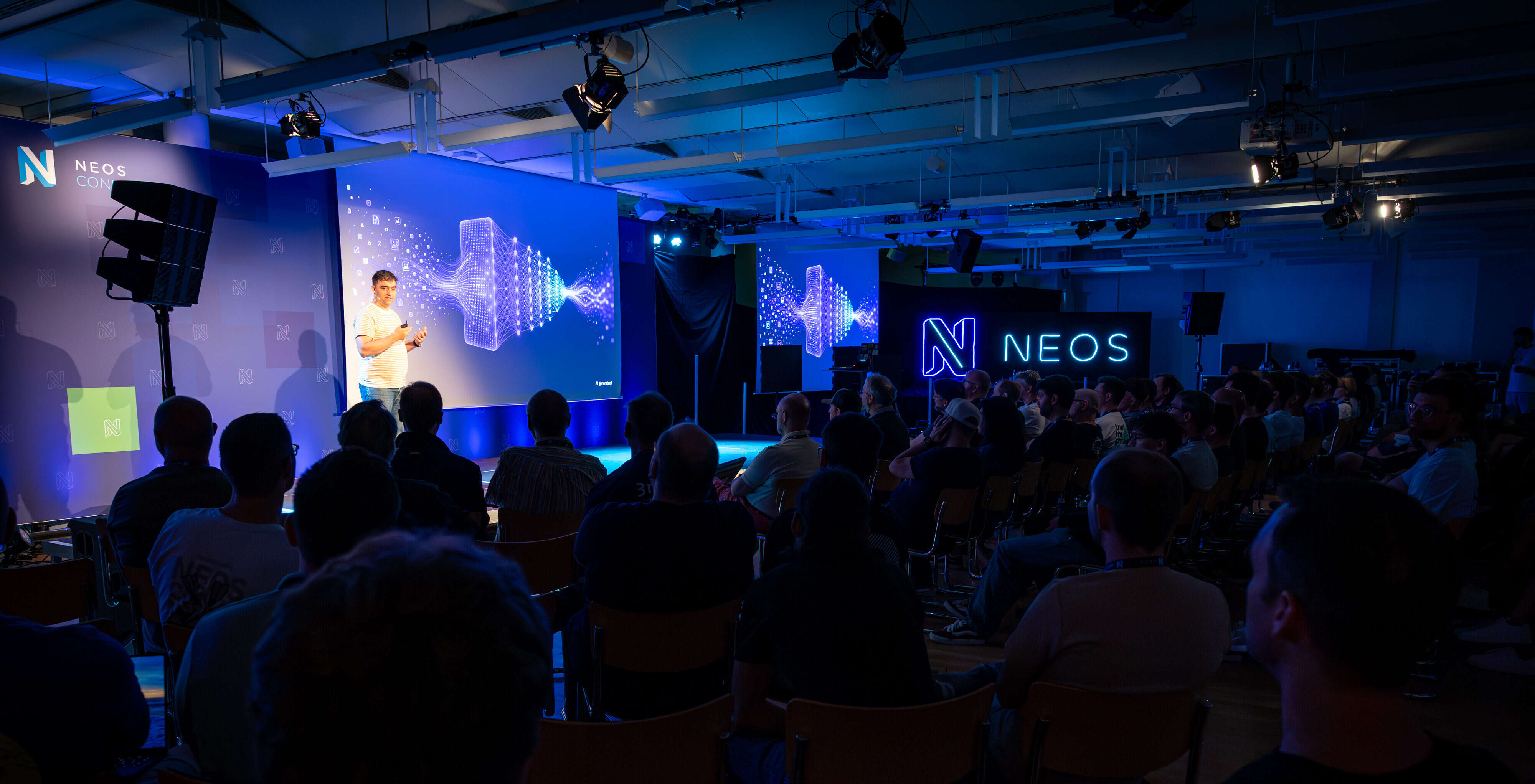
In early June, I was on stage at the Neos Conference in Karlsruhe, trying to describe just how much the world of content management is shifting right now. And like probably everyone else, I’ve scrolled past posts that go something like this:
“Build a fully functional website in 5 minutes with AI. CMS is dead. RIP CMS.”
There are plenty of posts like that right now. And they annoy me every time. They’re partly right, of course. But they don’t tell the whole truth.
When I gave talks on TYPO3 and later Neos many years ago, there were regularly attendees who explained that they, too, had developed one CMS or another over a weekend. So what exactly was the problem?
Sure, you can build a website in five minutes with AI today. It’ll work, too—as long as you take a very broad view of what “works” means. If “website” to you means displaying static content acceptably in a browser.
» Surely everyone has built a CMS over the weekend at some point. What's so hard about it? «
But if “website” means to you: a place where content is reliably created, managed, maintained over time, processed by people and machines, and remains under your control—then the opposite of what the Vibe Coding posts claim is true. Then we need content management systems more urgently than we’ve ever needed them. They aren’t losing their raison d’être in the AI revolution. They’re finally getting the role they should have always had.
What the “five-minute website” overlooks
Anyone who clicks together a site in five minutes using a generator gets a static state. A snapshot. What they don’t get is everything that comes after those five minutes:
- Who will update the content tomorrow, next week, in two years?
- Who decides what goes out, and who reviews it beforehand?
- Where is the content stored if it’s also supposed to be cited in a mobile app, a press release, or an AI search result?
- What happens if someone (for example, a certain “Claude”) changes something that shouldn’t have been changed?
- Who is liable if the content is incorrect?
These are the real questions of content management. They were twenty years ago, and they are even more so now. A five-minute website doesn’t answer any of them. It simply skips over them.
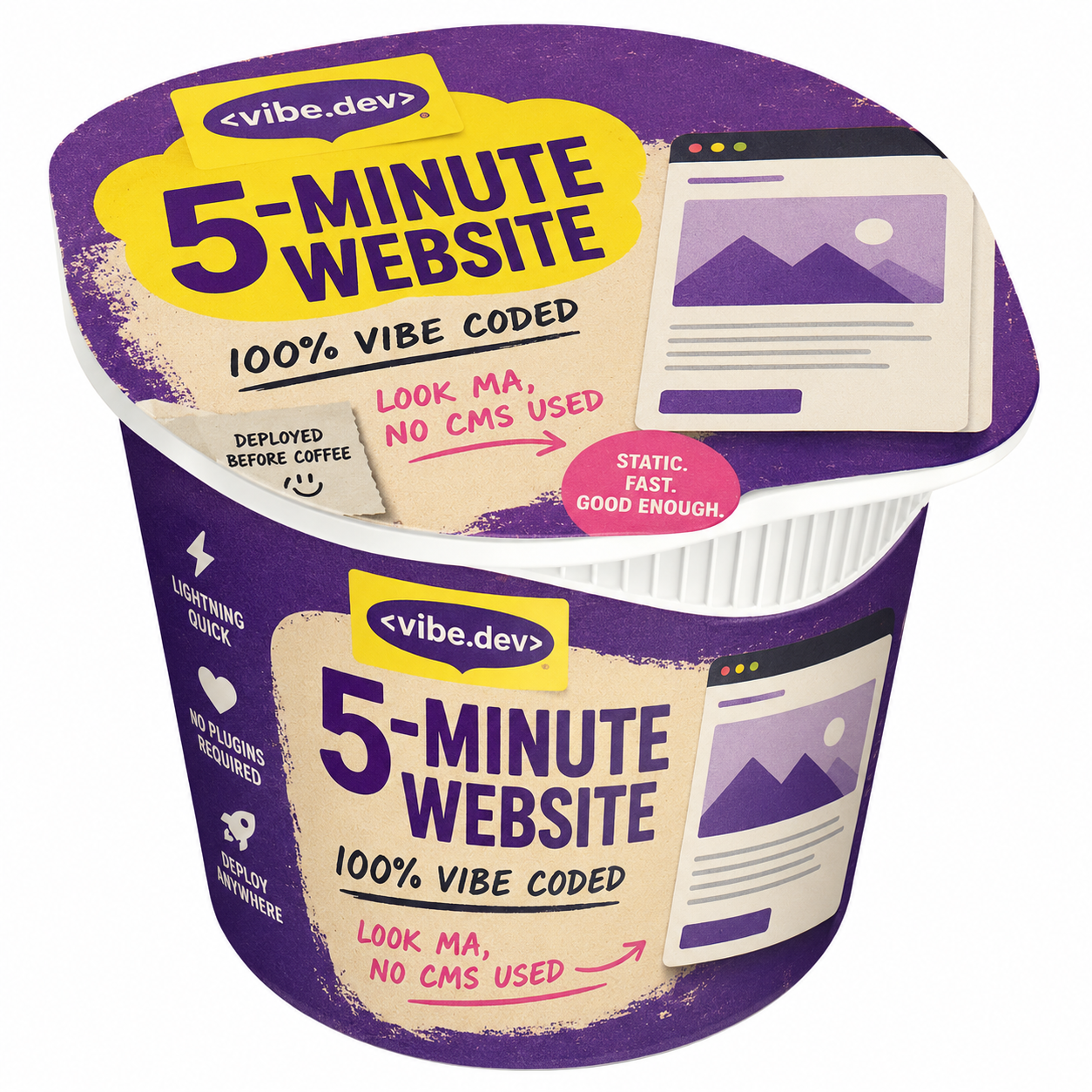
A Vibe-generated photo of a Vibe website generation soup
Does anyone actually read things anymore?
In my keynote, I tried to articulate an observation that is currently upending everything: For thirty years, we’ve been building our websites and content management systems for people. That assumption is quietly crumbling.
Machines are the new readership on the web. AI agents visit the site on behalf of their clients, read it, extract information, and present the answer elsewhere—in a chat, in a summary, in a search result. Anyone who merely tells a nicely designed story on their website but doesn’t provide cleanly structured content won’t be understood by these agents. And thus won’t be cited. And thus, in a growing portion of searches, will simply be nonexistent.
But that’s only half the story.
Machines don’t just read our websites. They’re starting to edit them, too. An AI agent drafting a new blog post on behalf of an employee, tweaking a product description, or preparing a campaign page. Systems like Neos are thus gaining a new type of user—a role for which they were never designed.
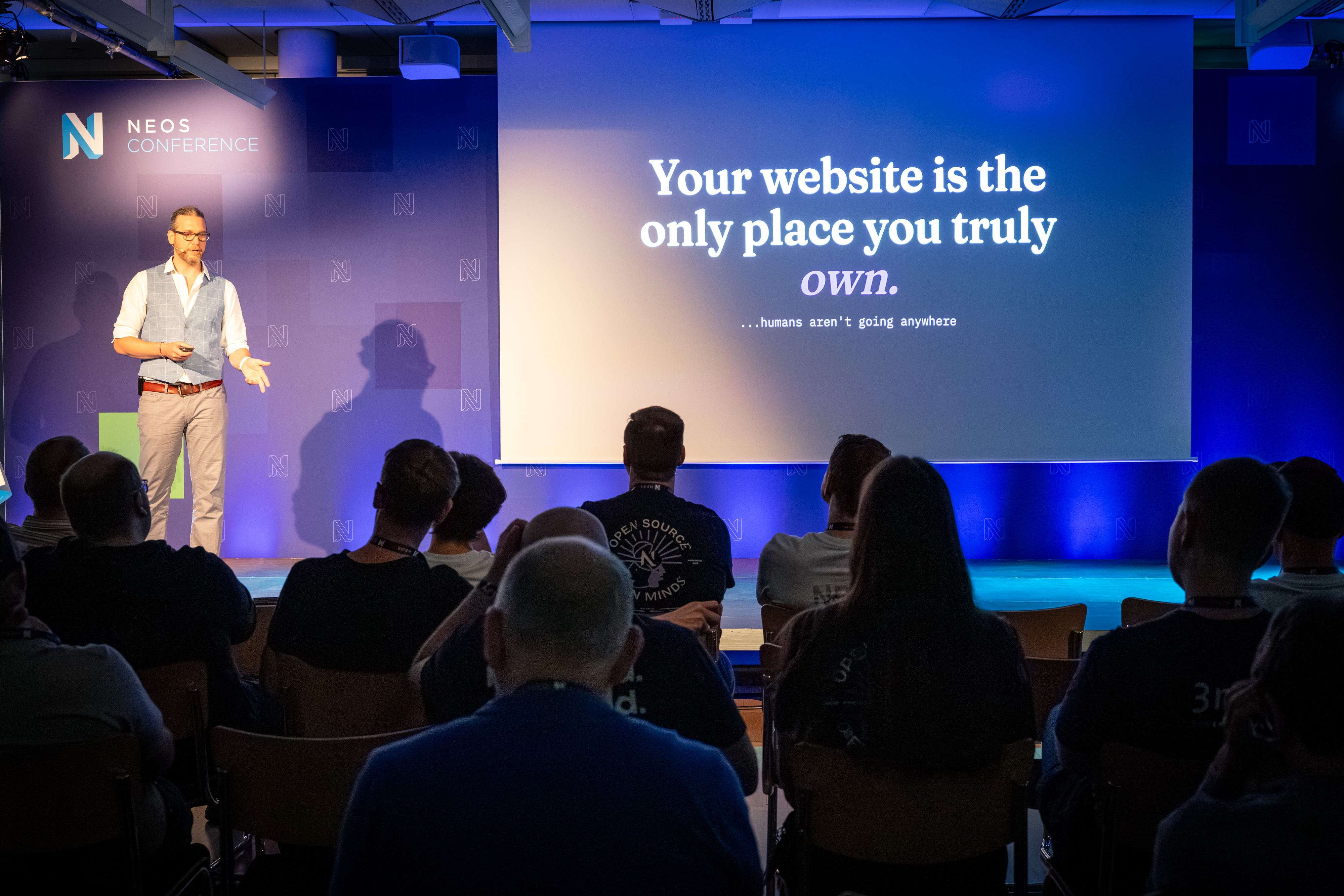
David Spiola during his talk "The CMS is dead. Long live the CMS"|Photo: Daniel Lienert
Two Webs, One Source
What emerges are essentially two parallel webs. The human web we know—pages that someone reads with their eyes. And the agent web, where machines retrieve content, process it, and display it elsewhere.
Both require the same substance: good, reliable, well-maintained content. But they need it presented differently. People want designed pages, with images, layout, and atmosphere. Agents want structure—semantic markup, clear fields, unambiguous meaning.
Anyone who wants to deliver both without duplicating their work needs a system where the content is available in a clean, modeled format—and can be delivered through various channels. In other words: They need a content management system. Exactly that.
Sovereignty means having options
There is another aspect that has long been important to me, and David Spiola, a friend and colleague on the Neos team, summed it up perfectly: In his talk “The CMS is dead. Long live the CMS,” he warned that our website is one of the last places on the web that we can fully control. Everything else on the web where we’re present with content is a walled garden that belongs to someone else. Google. Perplexity. ChatGPT. LinkedIn. Facebook. They’ll change their rules tomorrow. They’ll turn off the tap tomorrow. They’ll display our content with ads over it tomorrow. They can do that because it’s their playing field.
Our own website is the only place where no one stands between us and our readers. If we give up this place because we think that the answer engines are taking over our visibility anyway—then we’re voluntarily handing over the last stage that truly belongs to us.
That doesn’t mean we should ignore the answer engines. On the contrary: If you aren’t present in them, you don’t exist in a growing part of the web. We need to structure our content so that Perplexity, ChatGPT, and Google AI Overviews can understand and cite it. But we must do this in addition to, not instead of, our own site. Our own site remains the authoritative source against which everything else is referenced. And that’s exactly why we need a good tool.
Humans and AI work together, not one after the other
One thing I find particularly missing from the popular narrative is the likely reality of how we’ll work with AI in the coming years. Not: AI is now writing everything. But rather: humans and AI are working together on content. The agent makes a suggestion; the human reviews it. The human drafts; the agent suggests variations. The agent researches; the human takes responsibility.
This collaboration requires new features in the CMS. That means we need a place where suggestions can be made, commented on, revised, and approved. A system for reviews, suggested changes, and comments. For versioning and rollbacks.
The role of editors is shifting noticeably in this process. Writing is increasingly becoming checking, and creating is becoming taking responsibility. Those who used to type the content themselves now curate what the machine suggests—commenting, correcting, and approving. And in the end, they are responsible for what goes out.
But this shift in roles isn’t nearly as radical as it sounds. Anyone who works in software teams is already familiar with it: we call it DevOps. Version control, branches, pull requests, reviews, pipelines. In the content sector, we’ve only half-heartedly implemented this mindset to date (most workflows are still based on Word files and perhaps a Jira board). Now is the time to take this seriously. Because an agent that independently modifies content is a black box that we must tame using the same tools we know from DevOps.
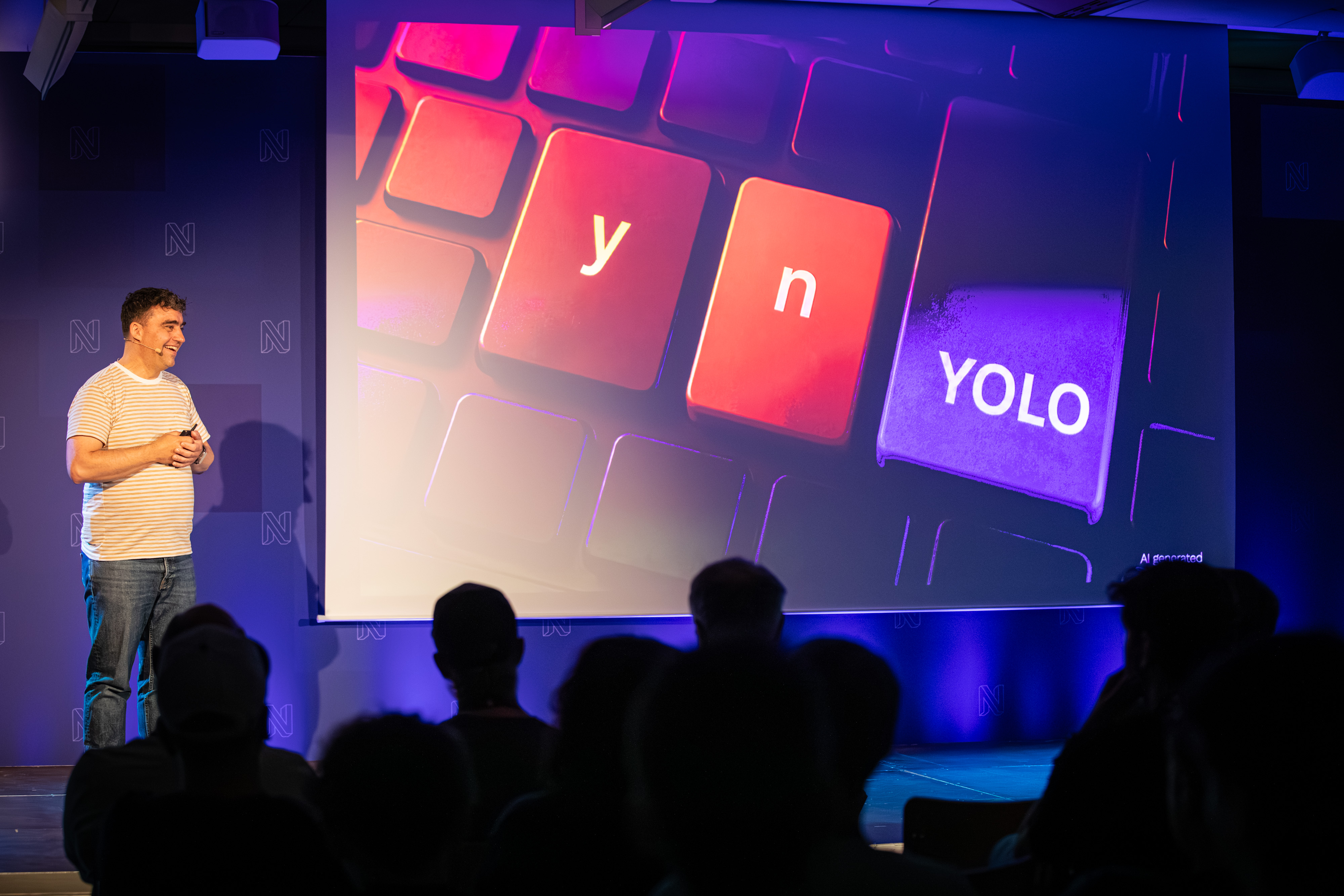
Robert Lemke during the opening address at the 2026 "Neos" Conference|Photo: Daniel Lienert
We’ve been exploring these kinds of topics for a long time in the Neos project. Our new content repository follows the “Git for content” paradigm (which basically means: “similar to Git, but for content”). That’s why we’re currently thinking about exactly these kinds of features: review workspaces, comments on individual pieces of content, and suggested changes similar to Word’s “Review” mode. Universal, regardless of whether the suggestion comes from a colleague or an agent.
None of this is set in stone yet and only emerged shortly after the conference. But one thing I’m certain of: this layer has to happen.
What a CMS Needs to Offer in an AI-Driven World
When I list what a content management system will need to deliver in the coming years, I end up with a list that five years ago, no one would likely have considered particularly important:
- Structured, semantic content for the machine experience
- Audit trails and rollback, because agents do things we need to track
- Workspaces and reviews, so that humans and AI don’t get in each other’s way with their content
- Clean, complete APIs, because we need content across many channels—even where only a machine is listening
- A truly great editor experience, because humans stay in the loop (and still write texts themselves)
As I said, we started building some of these things in Neos years ago. Event sourcing, cleanly separated content and presentation layers, content dimensions, workspaces. Sure, some people thought that was a bit over the top back then and believed we were building a foundation for a problem that didn’t even exist. Today, that foundation is holding up, and I’m glad we built it.
What Remains
The narrative that the CMS is dead is tempting because it’s simple. It’s also wrong. The CMS isn’t dead. It’s just becoming what it always should have been: the place where an organization reliably stores the truth about itself—and the place where it controls how that truth is processed, presented, modified, and accounted for. For people, for machines, for the next generation of interfaces we don’t yet know.
Anyone who shifts everything to the answer machines right now and abandons their own platform is giving up their last sovereign stage. Anyone, on the other hand, who maintains their own space, cleanly structured, with tools for both people and machines—that person isn’t behind the times. They’re exactly where the web is just beginning to go.
It’s not about whether the CMS will survive. It’s about who, in ten years, will still have control over their own content and who will have handed it over to platforms whose rules they don’t know.
Any ideas or comments? I'd love to hear from you.
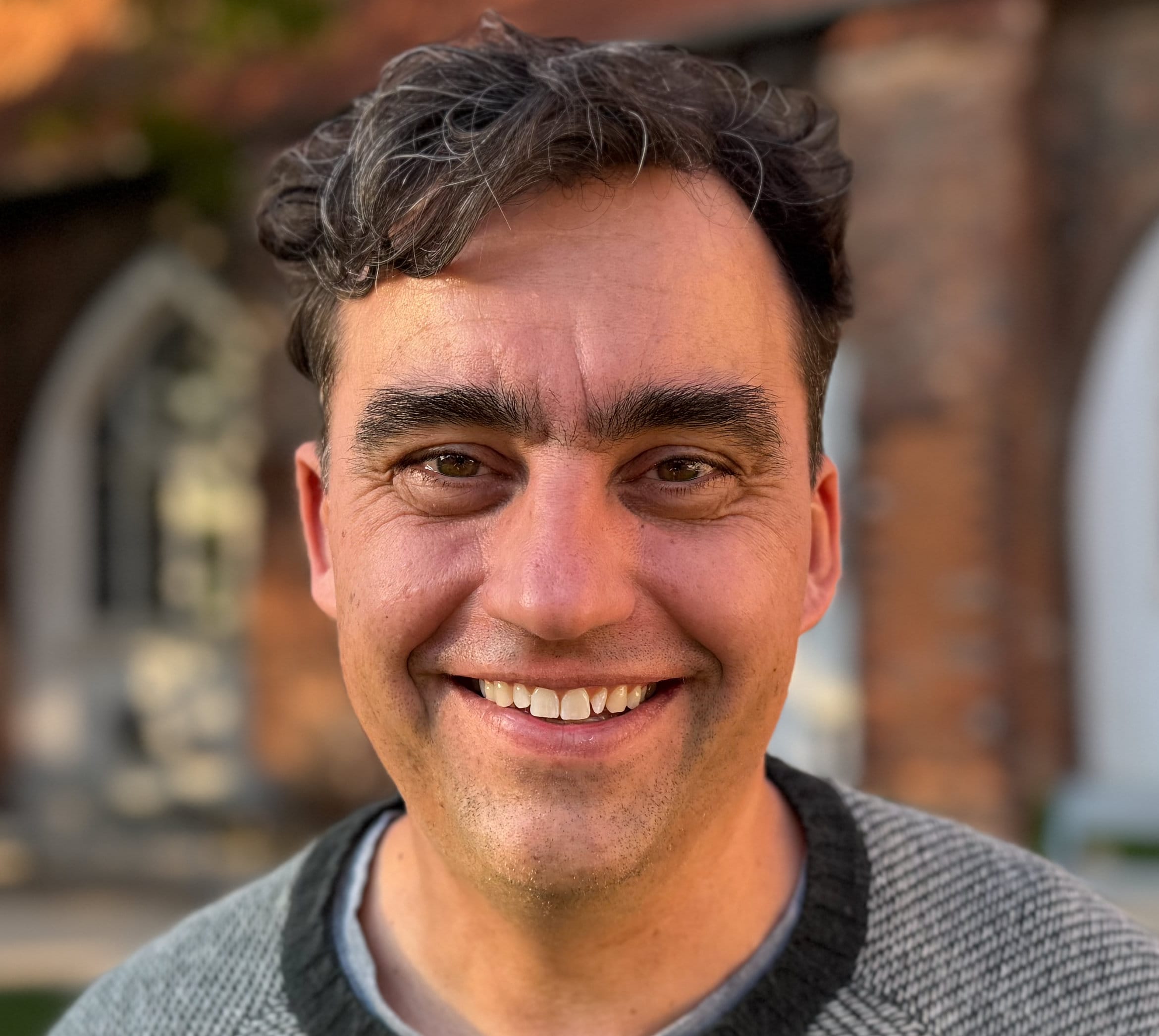
Robert Lemke
Managing Partner